beside the seaside
The ‘blue space’ connection: Why are we so attracted to the Sea?
With the final bank holiday of the year on the horizon and record numbers planning to see out summer at the beach, Stylist investigates the lure of the open water
words: Meena Alexander
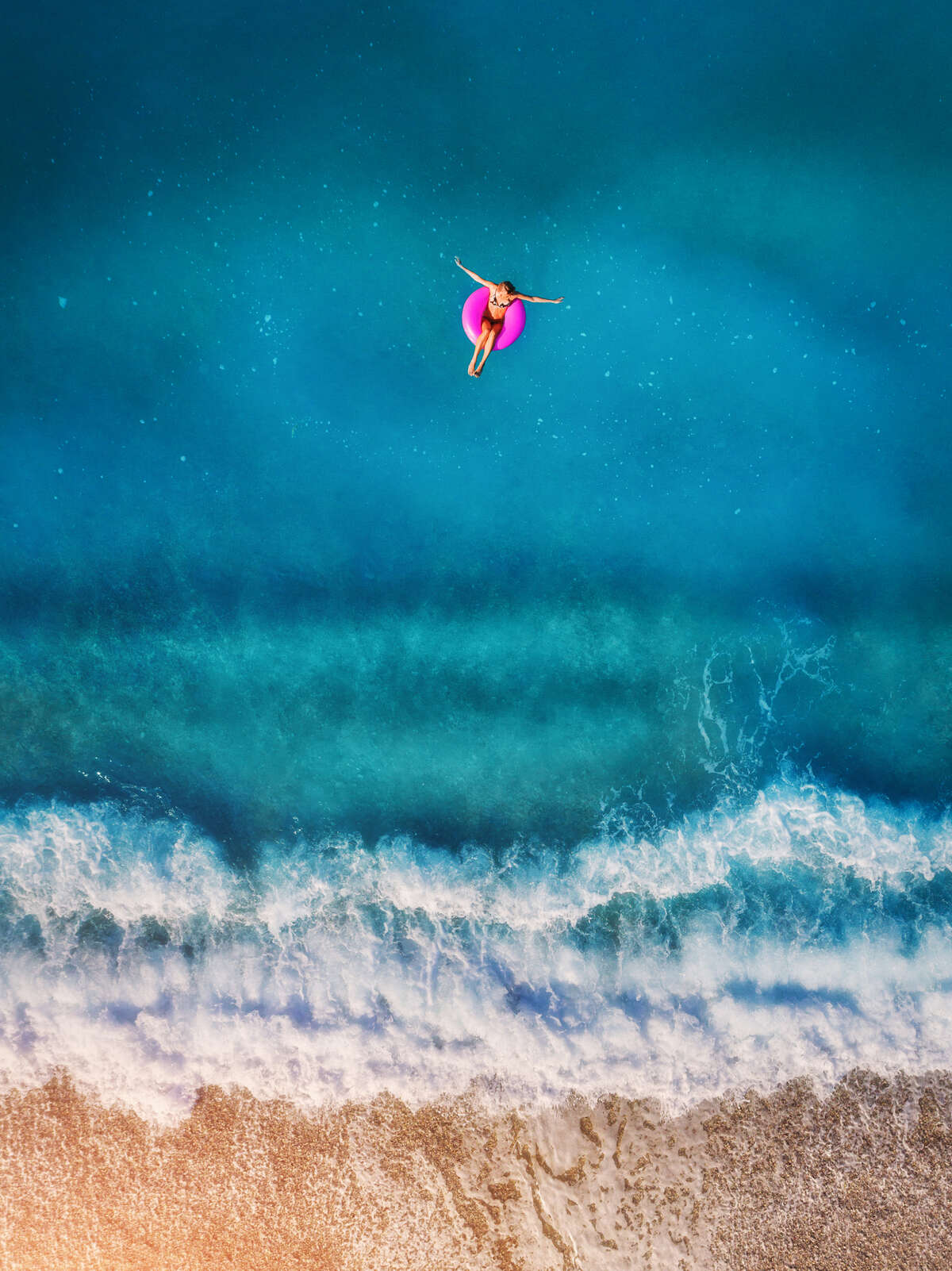
“Imagine yourself standing in the sea, chest deep, looking out to the horizon. It’s just you and the water, maybe you can see your reflection. You’re noticing your breathing and the sound of the waves. It’s a stillness and a bone-deep calmness you cannot get anywhere else.”
Dr Catherine Kelly, an academic, wellbeing practitioner and author of Blue Spaces, has spent years studying humans’ “innate connection” to the sea, after the sudden loss of her mother prompted her to up sticks from London and move to the wild Atlantic coast in the west of Ireland. “I just knew that was where I needed to be to get over the trauma; I quickly connected the sea with finding solace and feeling well,” she says. “A lot of us have a strong urge to go to the water in times of need: to clear our minds, to breathe, to gain perspective. It’s an intuitive human response, but it wasn’t until much later in my academic career that I was able to put the research and words to what comes naturally.”
A lot of us have a strong urge to be by the water in times of need
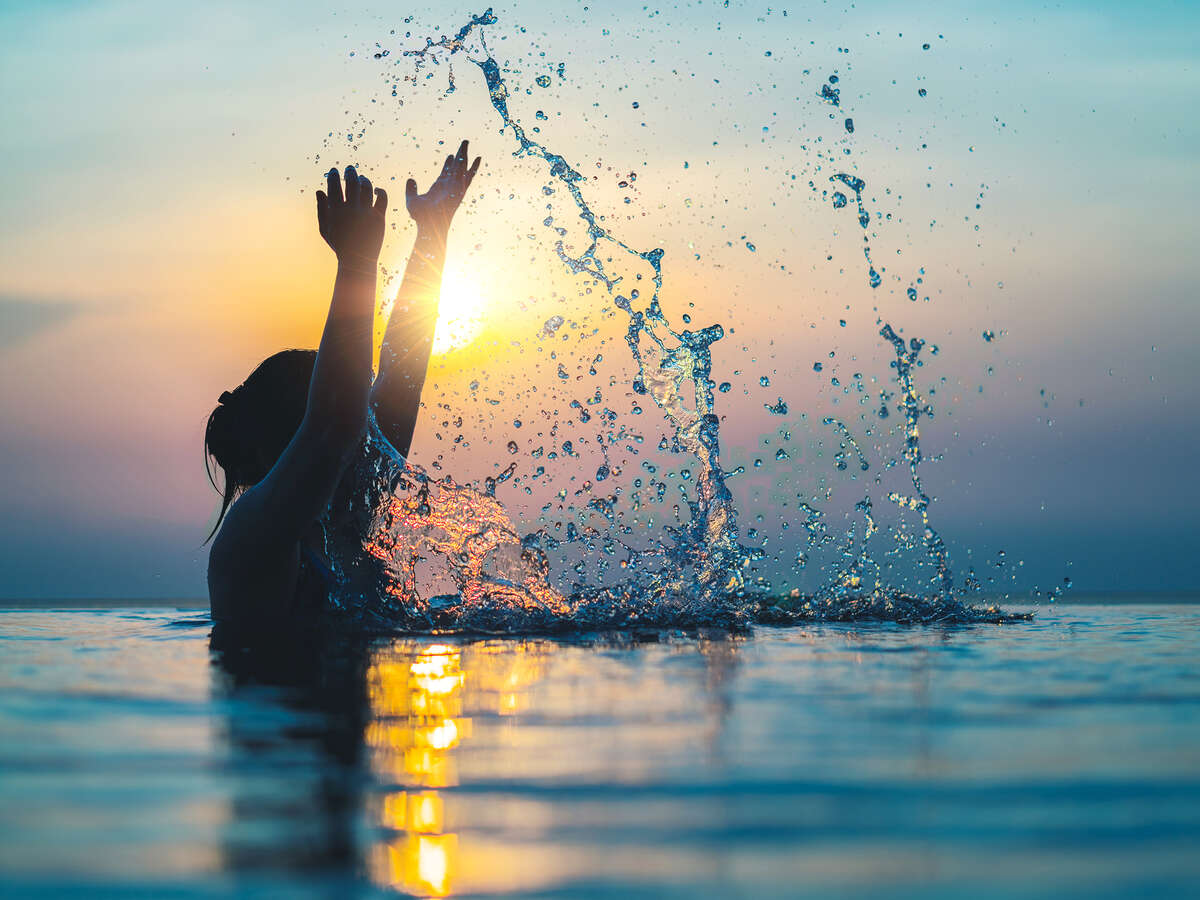
A lot of us have a strong urge to be by the water in times of need
The sea looms large in our collective consciousness: it’s synonymous with holidays, fresh air, freedom. Over the past year and a half, many of us have felt the pull of wide open blue spaces: wild swimming groups have sprung up like daisies around the country and 30 million of us had plans to spend some of this pandemic summer on the coast*. Some made more permanent moves as they reassessed how they wanted to live, with a mass exodus from built-up cities to beachside towns like Margate and Whitby. A coastal home remains the pinnacle of British real estate, with seaside property prices leaping 10% in the past year alone.
Like magnets, we’re attracted to the deep blue – but is it a biological phenomenon, or a cultural one? We’ve all seen enough postcards depicting the turquoise waters of paradise, or films where main characters gaze out across the water, sighing contentedly, to make the connection: by the sea is the place to be. There is, of course, a small number of people who find the ocean wholly terrifying – and with 80% of it still completely unknown to us, that is understandable – but for the vast majority, it’s a place of pure positivity. And that’s nothing new.
A home with a seaview remains the pinnacle of British real estate
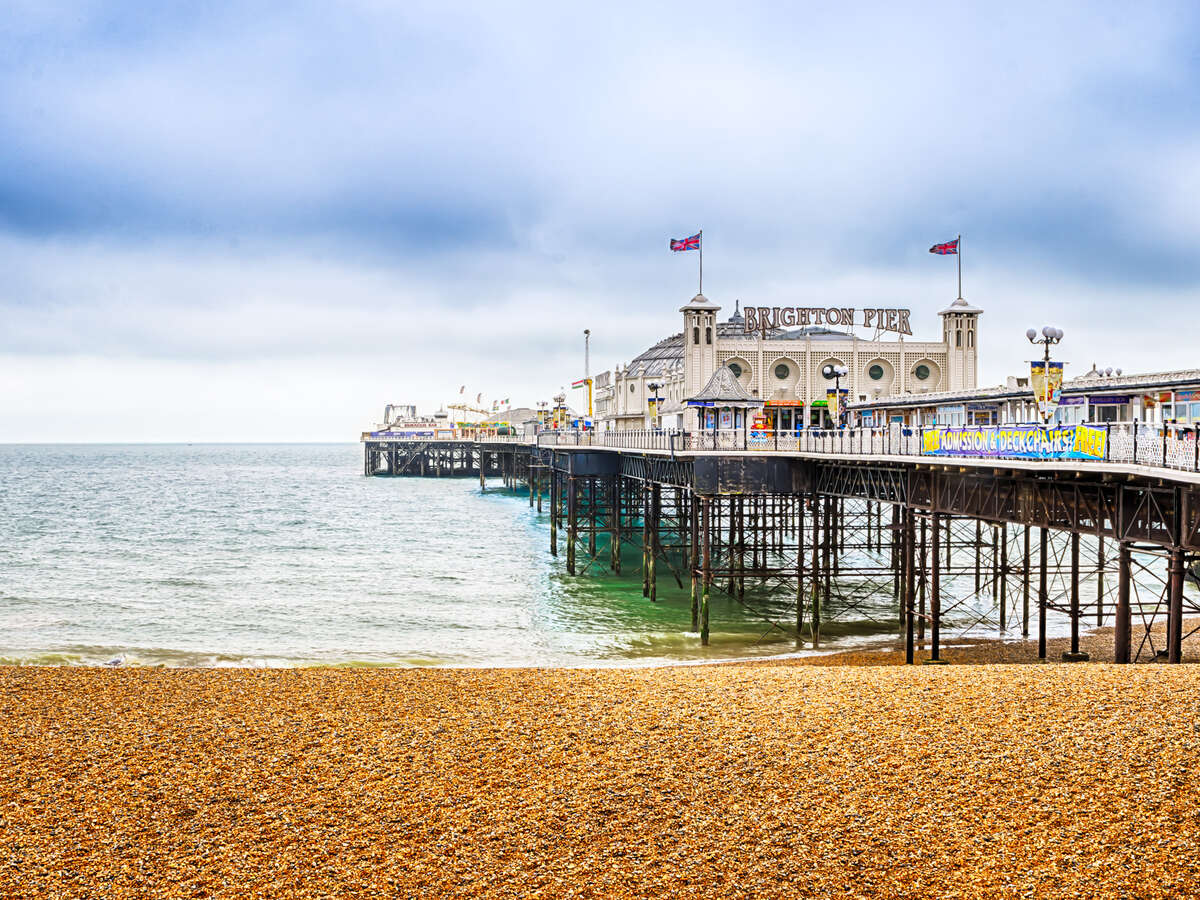
A home with a seaview remains the pinnacle of British real estate
Coastal culture
“The sea has a special place in pretty much every culture, globally and historically, going back millennia,” says Bonnie Tsui, author of the bestselling Why We Swim, an ‘investigation of what seduces us to water’. “In my research I came across Ancient Greek doctors who prescribed cold sea dips and Abyssinian carvings of people swimming together – it’s a place we’ve always known feels natural to us, even if we’re not sure why.”
There are, of course, the obvious reasons for our initial connection to the coast: early settlements clustered there because it meant protein-rich food, more sunlight and relative safety from land predators. As societies developed and spread, the seaside became a place intrinsically linked with wellbeing: take the Victorians, who created the British resort as we know it, a place to ‘take the sea air’ and reinvigorate yourself away from the smog of the city. The sea was seen as medicinal, and though Victorian doctors were wrong about a lot of things (they also thought arsenic was medicinal), they were right about that – it’s only recently that we’re starting to see the science to back it up.
The ‘blue space’ connection
Kelly is at the forefront of the ‘blue space’ movement, which has seen academics connect the dots between the physiology of how our bodies respond to being in or near the ocean with the psychological effects that have been clear to see for centuries. As the mental health crisis worsens and climate change continues, there’s hope that by proving the human benefits, we’ll be more inclined to protect our blue spaces – rivers, lakes and most of all, the sea. She references a landmark national study carried out by the University Of Exeter in 2012, the first of its kind, which proved that coastal environments improve our wellbeing more than any other. “Green spaces and forests are lovely,” she says. “But the sea always wins.”
The sight of it alone, as you drive towards the coast and catch that first glimpse, provokes a visceral response. “It gives us this immediate sense of awe and perspective. Your shoulders drop and you breathe out – and when you do that, the stress hormones coursing through your body are diluted,” Kelly says. Then there’s the sound: there’s a reason waves lapping the shore can be heard on sleep tracks and in spa treatment rooms the world over. “The sound of water induces alpha wave activity in the brain, which is associated with relaxation, calm and creativity,” explains Tsui. Even running water from a tap has this effect – which is likely why so many of us get our best ideas in the shower.
on holiday, that first glimpse of the sea invokes a visceral reaction

on holiday, that first glimpse of the sea invokes a visceral reaction
Swimming therapy
If being by the sea is enough to feel the benefit, why do we feel such an urge to get in it? These days, no matter the weather, you’ll find scores of eager daytrippers along Britain’s coasts preparing for an icy dip – this year British retailer Mountain Warehouse reported a 229% rise in wetsuit sales. “We’re starting to gather clear evidence that cold-water swimming has a huge impact on mental health,” says Kelly. “When we get into the sea, the cold water triggers our vagus nerve, which produces an anti-inflammatory response in our bodies – an antidote to things like depression, anxiety, stress and even migraines and digestive issues, all of which are related to inflammation. Antidepressants are based on this vagus function, but the sea triggers it naturally.” Indeed, if you walk along Brighton beach at just the right time in the morning, you’ll hear cries of ‘Vagus, baby!’ as Kelly’s swimming group, the Salty Seabirds, plunge into the surf and feel that natural high.
There’s also the fact that salt water buoys us; we feel literally supported when we get into the sea so the muscles we use to stay upright on land can relax – as can our brains. Kelly references ‘blue mind’, a phrase coined by marine biologist Wallace J Nichols to describe the meditative ‘drift’ state that water can induce in us without any real effort on our part. We’ve all had that moment on holiday, floating on our backs staring up at the sky, our minds emptying. “The sea meditates us,” says Kelly. “Its motion and sounds and endless blue are all mesmerising to us – hypnotic, even. There are not many environments like that on Earth.”
A place of community
It’s clear, then, that though we are pitifully poor at swimming compared to most species on the planet, we do belong by the sea – but it’s not just biology that makes it our collective happy place. “Social wellbeing is critical to mental health,” says Kelly. “And the seaside creates community and really formative social memories.” Think of the camaraderie and shared euphoria of a group running into the sea together, or the powerful nostalgia of childhood beach holidays – these moments take on a dreamlike quality because being by the coast gives us an increased sense of what psychologists call ‘existential authenticity’. It’s a phenomenon Kelly has dedicated entire academic journals to. “People feel they are their truest selves when they’re by the sea,” she explains. “We bring the best version of ourselves to the coast – the idyllic setting brings out our essence, almost. Especially if we are spending time with loved ones or quality time with ourselves.”
That pull to water, then, must be telling us something: that we need a break, to reconfigure, to reconnect with ourselves and others. The best part? There’s no wrong way to do it – whether you love a bracing dip at sunrise or prefer lounging in the sand with a margarita, you’re feeling the benefits of blue space in all its therapeutic power. If that’s not a good enough reason to book your next beach holiday, we don’t know what is.
